 Southern New England Jewish Ledger
“Jews can do a great deal for the future of democracy if they can stand up to some of the most dangerous aggressors in the world today.”
By Cindy Mindell

Dr. Ruth Wisse
Scholar and literary and social critic Ruth R. Wisse is the Martin Peretz Professor of Yiddish Literature and professor of comparative literature at Harvard University.
She received a 2007 National Humanities Medal for her “scholarship and teaching that have illuminated Jewish literary traditions” and her insightful writings that “have enriched our understanding of Yiddish literature and Jewish culture in the modern world.” She credits her passion for teaching to the Jewish immigrants who were her teachers in Montreal: “I had brilliant teachers at my Jewish day school. These young men had no better opportunities. They were displaced intellectuals and went into primary education to our extraordinary benefit. They were engaged with life. At an early age I saw the calling of literature and teaching as inseparable from civic responsibility.”
Wisse is a member of the editorial board of the Jewish Review of Books and a frequent contributor to Commentary magazine. Her books on literary subjects include an edition of Jacob Glatstein’s two-volume fictional memoir, “The Glatstein Chronicles” (New Yiddish Library Series, 2010); “The Modern Jewish Canon: A Journey through Literature and Culture “(Free Press, 2000), and “A Little Love in Big Manhattan” (Harvard University Press, 1988). She is also the author of two political studies – “If I Am Not for Myself…: The Liberal Betrayal of the Jews” (Free Press,1992) and “Jews and Power” (Schocken, 2007). Her latest book, “No Joke: Mocking Jewish Humor,” a volume in the Tikvah-sponsored Library of Jewish Ideas, is forthcoming in spring 2013 from Princeton.
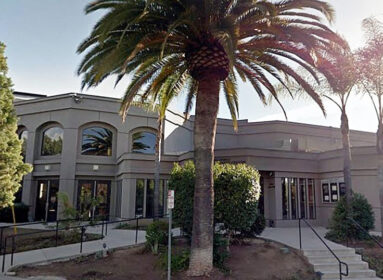
On Thursday, Oct. 4, Wisse will deliver the 28th Annual Harold E. Hoffman Memorial Lecture at Temple Beth El in Stamford on the topic of “Anti-Semitism and Tikkun Olam: How Jews Can Best Repair a World in Crisis.”
She spoke with the Ledger about how Jews must rise above the peculiar problem of “Jewish politics” to face a task no less critical than our ultimate survival.
Q: What motivates you to ask and address the central question in your talk?
A: It’s not such a difficult question to answer. My field of concentration has been Yiddish literature and modern Jewish literature; it exposes you to the realities of Jewish life in the 19th and 20th centuries. Those realities have been fairly brutal – not exclusively brutal but cumulatively so.
If there is any field of study that forces you to concentrate on what goes wrong in Jewish history, it is the study of Jewish literature. Many Yiddish writers were themselves concerned with the growing threats to Jewish life and, in reading this literature, quite naturally I became interested in one of the areas in which Jews have not excelled, and that is in politics. So the two things are not wildly dissimilar, and in my case, I just felt that one field led me to concentrate also on the other. I write about Yiddish literature and just finished a book on modern Jewish humor. I have also written two books about politics, “If I Am Not For Myself: The Liberal Betrayal of the Jews,” and “Jews and “Power.”
Q: What is the central problem of “Jewish politics?”
A: There is something very exceptional about Jewish politics, and something that can be tested empirically: Jewish politics is different from the politics of most other nations, and Jewish politics is not only different from, but antithetical to, the nations that target the Jews. It does not make sense for Jews to blame themselves for the aggression leveled against them, or to think that they can compensate for the harm that other peoples, for example, Arab nations, do to one another.
As I write in “Jews and Power,” the animus against the Jews has not been directed to any correctable attribute or rectifiable lapses in them.
Q: Briefly, how can Jews best repair a world in crisis, as suggested in the theme of your Oct. 4 talk?
A: Well, they certainly cannot do it “briefly.” In truth, they cannot do it at all, if they mean to go around fixing other people’s mistakes. The one thing Jews can do and should do is to tell the truth about the aggression against them, the way Israel is trying to alert others to the dangers represented by Iran. Those who target the Jews are always after something much, much larger than merely destroying the Jews. If the Jews had managed to stop Hitler from destroying them, they would have helped secure the world last century. Jews can do a great deal for the future of democracy if they can stand up to some of the most dangerous aggressors in the world today.
Q: How do you define “tikkun olam” and how does it figure into your talk?
A: I want to try to reformulate the understanding of tikkun olam. I think the term has been misapplied and misunderstood. I think that Jews can make the world a better place if they can find a way to get others to stop targeting the Jews. Jews are a small people and a vulnerable minority. The way Jews manage their lives as a people is complicated by the inflated role they play in the imagination and politics of other nations. Jews may do wonderful things: The term “start-up nation” captures many of the dynamic achievements not only of Israel but of Jewish communities elsewhere. But, like it or not, whatever Jews accomplish may matter less than how well they can stand up to the anti-liberal, anti-democratic rulers and forces that target them – them in particular – as the embodiment of all that they wish to destroy. By standing up to their attackers, Jews stand up to some of the worst forces in the world.
I often quote the Boston Irish taxi driver who said to me, back in the 1970s, “Israel is America’s fighting front line!” This is not a task that Israelis ever wanted, and, in fact, they wish and work to get their country out of the line of fire. But not for the first time in modern history, Jews have been assigned a task not of their own choosing. Israelis may want to help others by bringing them their know-how, agricultural expertise, medical innovations, cultural treasures, the example of democracy in a difficult region, etc. etc. Yet history will ask only one question of them and of us: Did you or did you not secure the Jewish state? The international ramifications of that challenge far outweigh any other good that Jews can do in this century. It’s for Jews to persuade America and the rest of the democratic world of the importance of that task – importance not for the Jews alone.
I hope to clarify some of this in my talk.
“Anti-Semitism and Tikkun Olam: How Jews Can Best Repair a World in Crisis” with Dr. Ruth R. Wisse: Thursday, Oct. 4, 7:30 p.m., Temple Beth El, 350 Roxbury Road, Stamford | Info: (203) 322-6901 / www.tbe.org.
Comments? Email cindym@jewishledger.com.
SHARE